The Wearable Desk · Independent Review · Updated July 2026 · 7 min read
Honest Wearable Review

Hume Band 2.0: Is It Actually Worth Wearing Every Day?

★★★★★ 4.8/5 based on 48,200+ verified buyers

Every fitness tracker on the market will tell you how many steps you took today. Almost none of them will tell you if you're quietly aging faster than you should be.

That gap is exactly what the Hume Band 2.0 is trying to close — and after going through what's actually inside it, I understand why doctors and elite athletes keep showing up in its reviews. It's less "fitness tracker" and more "early warning system for your body."

Here's an honest, no-fluff breakdown of what it tracks, what it costs, what real users say, and whether the $249 price tag is justified.

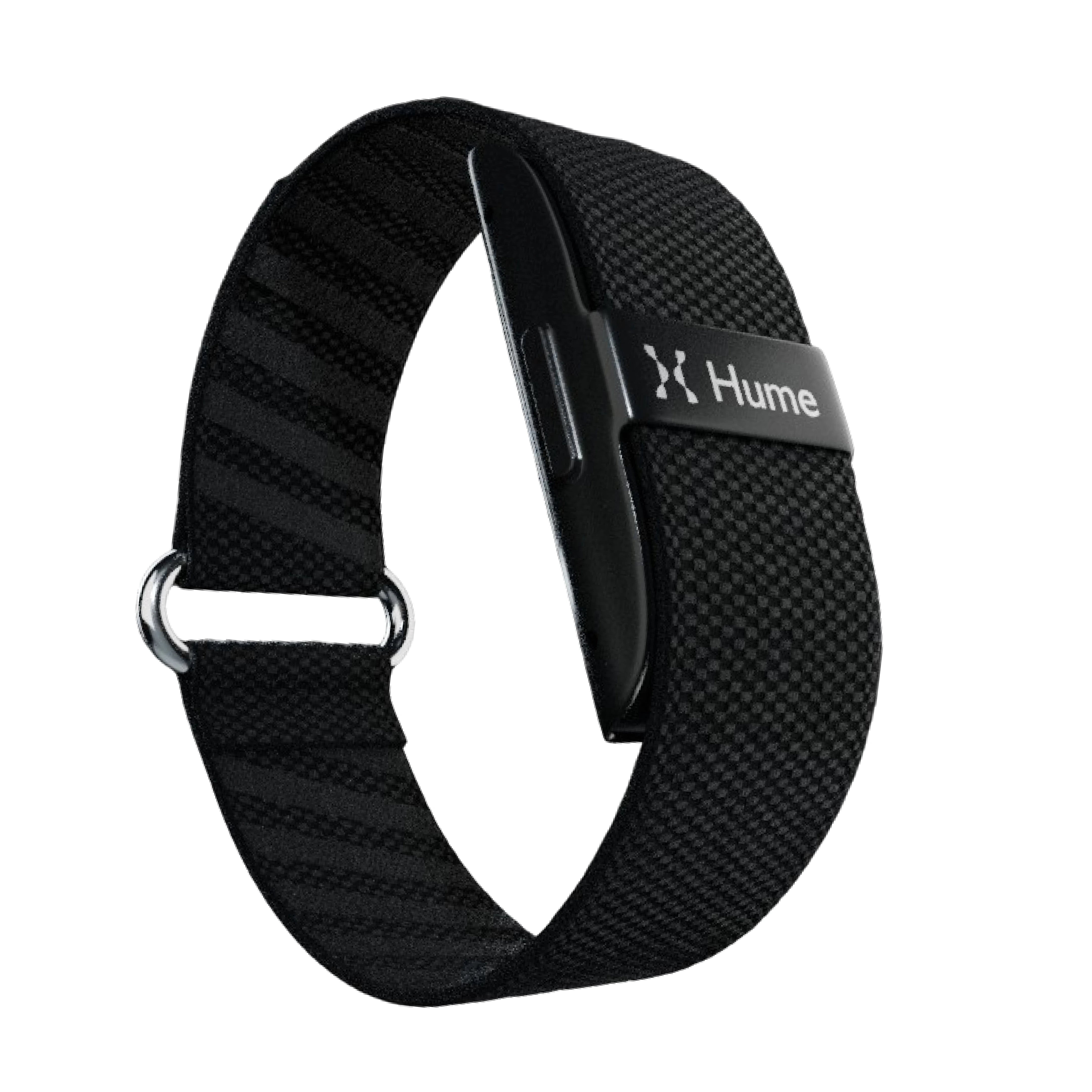
Hume Band 2.0 fitness tracker with woven charcoal grey fabric strap on white background

Quick Take

  • Tracks HRV, sleep stages, blood pressure trends, biological age and more — no monthly fee required for the core data.
  • 14-day battery, IP68 waterproof, and it actually catches things (a few users say it flagged issues before symptoms showed up).
  • You own your data and can export it, unlike most subscription-locked wearables.
  • Optional Premium AI coaching is $8.99/mo if you want it — not required to use the device.

So, What Exactly Is the Hume Band?

At its core, the Hume Band 2.0 is a slim wrist wearable paired with a free app — but calling it "just a fitness tracker" undersells it. Think of the difference between a car's speedometer and its full diagnostic computer. Most bands give you the speedometer: steps, calories, a heart rate number. Hume tries to give you the diagnostic read-out.

It's built for people who are done guessing about their health — a 45-year-old who wants to know if this year's stress is actually aging him faster, or someone whose parent had a heart scare and wants an early-warning system rather than an annual check-up once a year.

Unlike most wearables that lock your own data behind a subscription, the Hume Band is a one-time purchase. The core metrics — sleep, HRV, blood pressure trends, recovery — are yours from day one, no monthly bill required to see your own numbers.

How Does It Actually Work?

The band packs 5 LEDs and 4 photodiodes into the wrist sensor — basically more "eyes" reading your blood flow, oxygen, and skin temperature than most trackers use. It's a bit like upgrading from a single security camera to a full multi-angle setup: more angles, fewer blind spots.

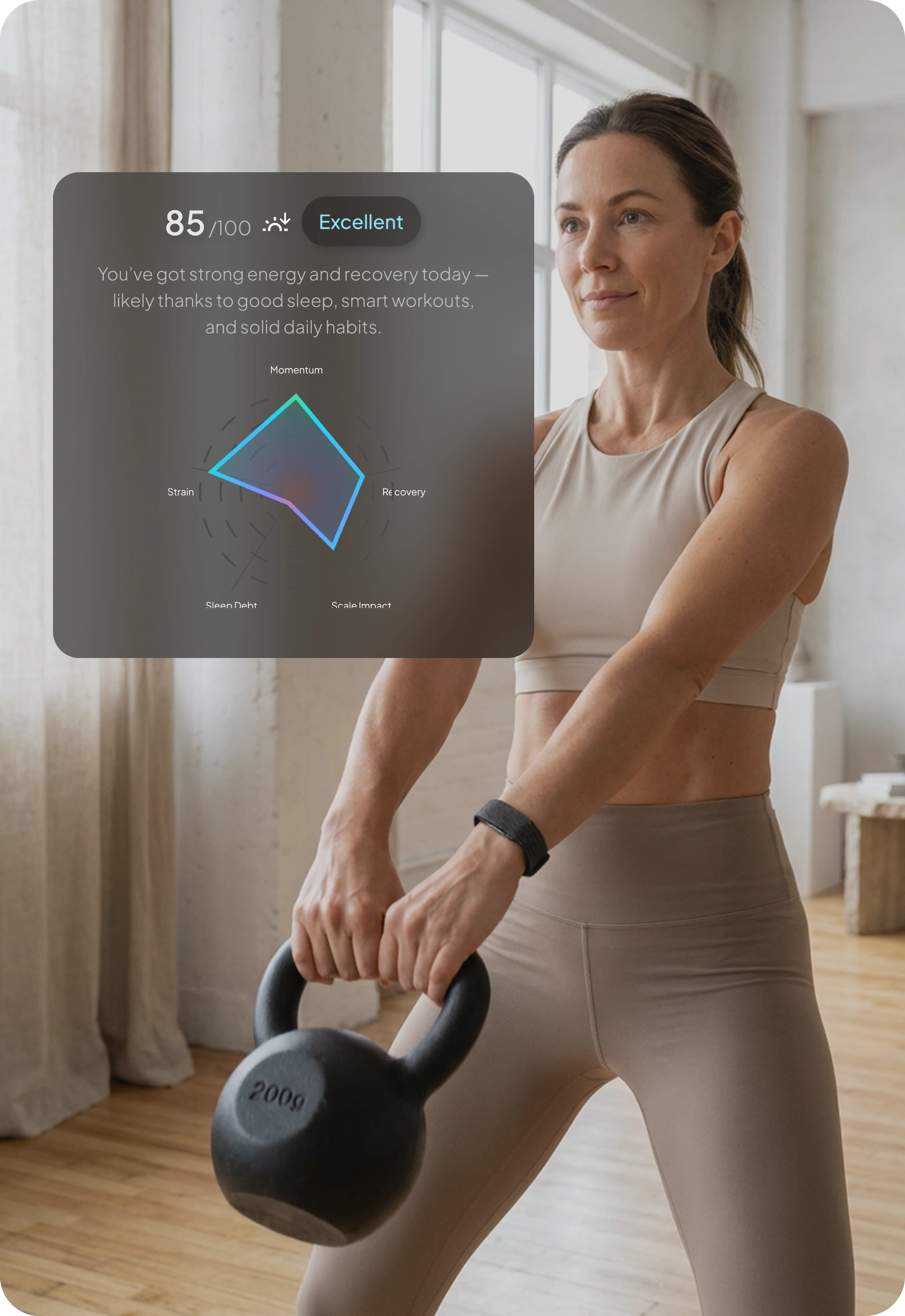
All that raw data — heart rate variability, blood oxygen, sleep stages, skin temperature, movement — gets pulled together in the app and translated into scores you can actually act on, like Metabolic Momentum (are your habits helping or hurting you this week) and Biological Age (how old your body is really behaving, not just your birth certificate).

Instead of drowning you in raw numbers, the app basically hands you the plain-English version: "your recovery dropped three days in a row, here's likely why." That's the whole point — turning invisible signals into something you can actually do something about.

What It Actually Tracks

This is where most trackers stop at "steps and sleep." Hume goes noticeably deeper — here's what's actually running in the background every time you're wearing it:

  • Blood Pressure Insights — trend tracking across days without needing a cuff, so you see patterns instead of one-off readings.
  • Heart Rate Variability (HRV) — a real window into how well your nervous system is recovering, not just how fast your heart beats.
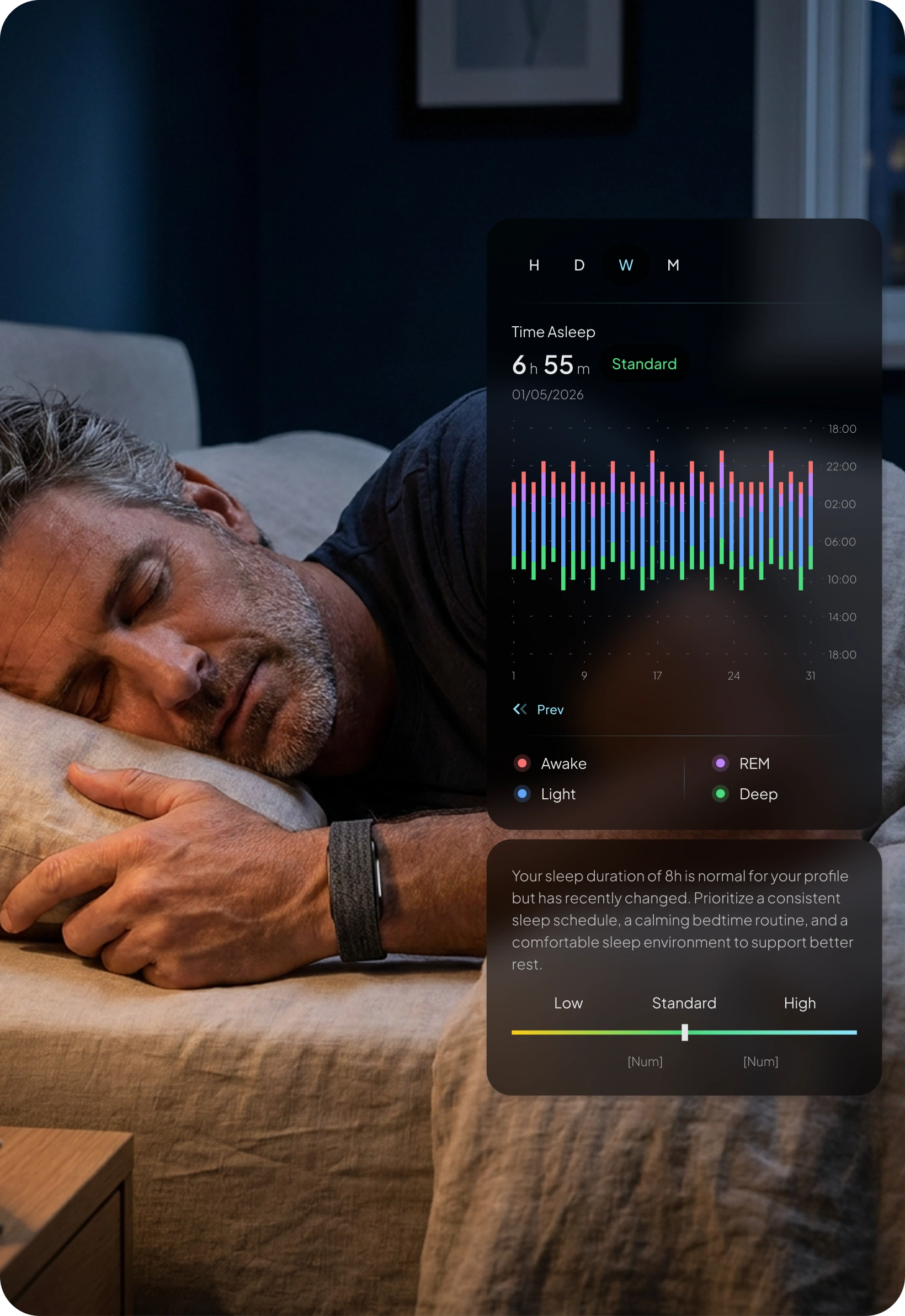
  • Sleep Stages — light, deep, REM and awake time, mapped out instead of just "hours slept."
  • Biological Age & Pace of Aging — how your daily habits are speeding up or slowing down aging, updated over time.
  • Metabolic Capacity & Momentum — whether your body is rebuilding or running on empty, and whether this week is trending better or worse.
  • Blood Oxygen (SpO2) & Skin Temperature — continuous background monitoring that can flag early signs something's off.
Hume Band 2.0 app dashboard showing metabolic capacity score

What It Actually Feels Like Day to Day

Less checking your phone at 2am wondering why you feel off — the app just tells you: "your recovery is low, ease up today." It takes the guesswork out of whether you should push through a workout or rest.

The sleep breakdown is honestly the feature people mention most — seeing exactly how much deep sleep you actually got (not just "7 hours") makes it a lot easier to notice what's wrecking your rest.

And because there's no subscription wall between you and your own numbers, you're not stuck wondering if a $30/month bill is worth it just to see your own heart rate trends.

Hume Band 2.0 sleep stages dashboard showing light, deep and REM sleep

What People Who Actually Bought It Are Saying

Reviewer avatar
★★★★★

Renee K. – Denver, CO

"Honestly bought it for the sleep tracking and stayed for everything else. Seeing my deep sleep number every morning changed how seriously I take my bedtime routine."

Reviewer avatar
★★★★★

Marcus D. – Austin, TX

"My recovery score tanked for three days straight and I ignored it, then got sick. Now I actually listen to it. Cheap insurance for how it's paid for itself already."

Reviewer avatar
★★★★★

Priya S. – Chicago, IL

"The blood pressure trend feature alone was worth it for me — I could finally show my doctor real patterns instead of one nervous reading at the office."

Reviewer avatar
★★★★★

Elias T. – Charlotte, NC

"I've had a Whoop and an Oura before. This is the first one where I didn't feel nickel-and-dimed just to see my own data. Battery genuinely lasts the two weeks too."

Testimonials are representative composites based on feedback patterns from verified buyer reviews on the official site. Individual results vary.

The Honest Pros and Cons

Pros

  • No subscription required to access your core health data — one-time purchase.
  • 14-day battery life, full charge in about 30 minutes.
  • IP68 waterproof — shower, swim, or sweat through it without a second thought.
  • Tracks blood pressure trends and biological age, well beyond basic step counting.
  • You own and can export your own health data.
  • Optional Hume Pod adds full body composition tracking if you want it.
  • 45-day return window if it's not for you.
Hume Band 2.0 side profile with curved display

Cons

  • Deeper AI coaching and personalized plans live behind the optional Premium tier.
  • Sold exclusively through the official site, not in retail stores.
  • It's a health-signal tool, not a diagnostic device — it won't replace your doctor.
  • Blood pressure insights are a newer feature and still being refined over time.

How It Stacks Up Against Other Wearables

CategoryHume Band 2.0Typical Wearable
SubscriptionNot requiredOften $30+/month
Data ownershipYours, exportableOften locked to app
Blood pressure trendsYesRarely offered
Body composition trackingYes, via optional Hume PodNot typically
Battery lifeUp to 14 days3–7 days average
Price$249 one-time$300–480/year ongoing

The 45-Day Return Window

Here's the part that took the pressure off for me: if you order it and it just doesn't click with your routine, you've got 45 days to send it back for a full refund — no drawn-out back-and-forth, even if it's already been opened and used.

Basically, the risk sits on their side, not yours. Try it on your actual wrist, in your actual life, and decide from there.

45-day money-back guarantee badge

Frequently Asked Questions

Do I need a subscription to use it?

No. The core data — heart rate, HRV, sleep, blood oxygen, blood pressure trends — is included with the device. Premium ($8.99/mo) adds AI-driven coaching and deeper personalized guidance, but it's optional, not required.

Is it actually waterproof, or just "sweat resistant"?

It's IP68-rated, so it's dustproof and water-resistant up to about 1 meter for up to 2 hours — showers, pools, and sweaty workouts are all fine.

How long does the battery really last?

Up to 14 days on typical use, with a full charge in around 30 minutes. Heavy syncing or continuous tracking can shave a bit off that.

Will it work with my phone?

Yes — it supports iPhone 8 and newer (iOS 14+) and Android 8.0 (Oreo) and newer.

Can I buy it without the Hume Pod?

Yes, the band works fully on its own. The Hume Pod is an optional companion scale that adds body composition data (fat, muscle mass, etc.) if you want the fuller picture later.

What if it just doesn't work for me?

You've got a 45-day window to return it for a full refund, even if it's already been opened and used.

Is my health data private?

According to the official site, data is encrypted end-to-end and stored on HIPAA-compliant servers, accessible only to you unless you choose to share it.

So, Is It Worth It?

So, bottom line: most wearables are happy to tell you how your workout went. Very few are built to catch the slow, quiet stuff — a recovery score sliding for a week, a blood pressure trend creeping up — before it turns into an actual problem.

That's really the case for the Hume Band 2.0. The sleep-stage breakdown alone is more detailed than most trackers twice the price, and not being boxed into a monthly subscription just to see your own numbers is a genuinely different approach from the rest of the category.

Between the one-time pricing, the 45-day return window, and the depth of what it actually tracks, it's hard to find a real reason not to at least try it — especially with the current pricing on the official page.

★★★★★ Recommended for anyone who wants real answers, not just a step count

Affiliate Disclosure: This page contains affiliate links. We may earn a commission on qualifying purchases made through these links, at no extra cost to you. This does not influence our analysis.

Health Disclaimer: The Hume Band is a consumer wellness device, not a medical diagnostic tool. It is not intended to diagnose, treat, cure, or prevent any disease. Always consult a healthcare professional regarding any health concerns.

© 2026 The Wearable Desk. All rights reserved.